---
date: Sunday, May 25^th^, 2025
title: Balanced academic orbit
---
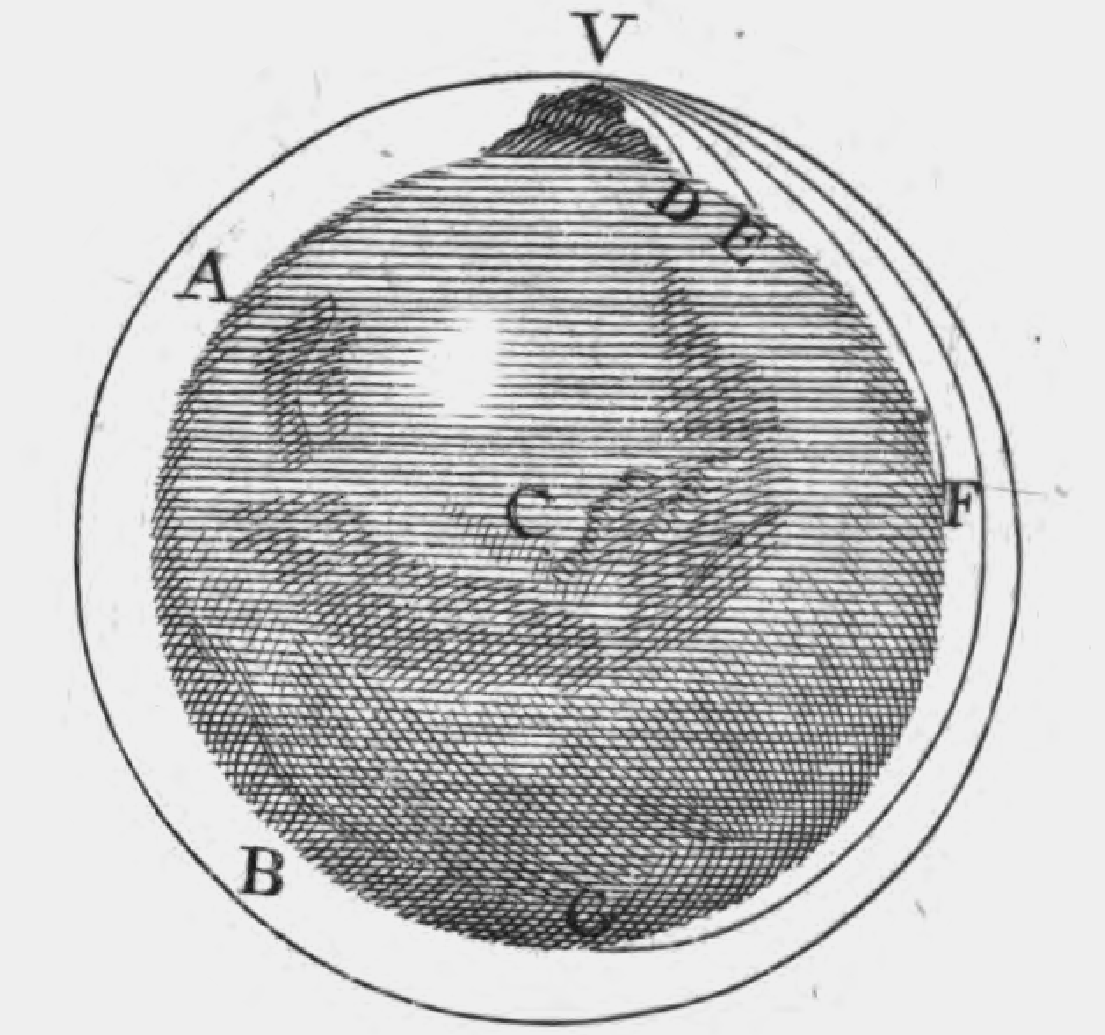
What is the difference between flight and orbit? Flight is a
never-ending fight against gravity. It requires consistent effort to
sustain. Given a finite fuel source, landing becomes inevitable. In
contrast, orbit uses gravity to its advantage---falling only spurs you
forward. *Progress* becomes essentially inevitable.
{width="50%"}
Until now, my long-term work pattern has been like a series of
*flights*---at times intense, but ultimately unsustainable. I have
demonstrated I have the fuel capacity to carry out long-haul courses of
study and research. But no matter how much fuel I start with, it
eventually runs out, after which I need to come back down to Earth to
recover and prepare for the next launch.
One of my grad school goals is to reach *academic orbit*---a state of
sustained free-fall, where I'm supported by expertise, networks, and
habits that make daily progress the default despite the challenges of
research and the distractions that come along with being an academic.
From there, over the weeks, months, and years of the rest of my career,
I can make steady, unrelenting progress on my ambitious research goals
of tackling challenging problems facing the future of civilisation.
`
`{=html}
This concept of 'academic orbit' comes from Alkjash's essay on the
[gravity
turn](https://radimentary.wordpress.com/2021/08/16/gravity-turn/).
Alkjash's essay focusses on certain specific aspects of academic orbit:
established researchers have a history of successful publications that
generate sequels and applications; a network of capable collaborators
that share research ideas; the reputation to draw in grad students and
postdocs to grow their research program year by year; and the context
and resources to frequently attend conferences to keep up-to-date on the
latest developments in the field.
In my experience, there appears to be another important element of
sustainable research that is not discussed in that essay: *achieving a
balance between investing for the short-term versus the long-term.* In
the intense race against one project deadline after another that
characterises flight, it's all too easy to spend all of my time in the
most short-term relevant activity (coding, running experiments, writing
papers, depending on the week). In contrast, it seems *impossible* to
save time for activities like the following.
1. **[Staring into the abyss](https://www.benkuhn.net/abyss/).** Asking
myself the [Hamming
questions](https://www.lesswrong.com/posts/P5k3PGzebd5yYrYqd).
Analysing the path to impact for my work. Thinking it through, or
rethinking it in light of newly-discovered limitations or barriers.
Deciding when to pivot to a new approach, or a new problem
altogether.
2. **Drinking from the firehose.** Monitoring developments relevant to
my field. In AI, this means paying (the right amount of) attention
to the dizzying array of developments announced by academia and
industry, while being careful to filter out the noise and update
only on the signal.
3. **Climbing the shoulders of giants,** or, even, of the giant *tower
of regular-sized people* that is the accumulated extent of human
knowledge. Practicing the [virtue of
scholarship](https://www.lesswrong.com/posts/64FdKLwmea8MCLWkE), and
even just building out an
[antilibrary](https://en.wikipedia.org/wiki/Antilibrary) so I know
where to look if I need something specific.
4. **Being a person.** A person who lives in a body that needs
nutrition, exercise, and sleep. A person who needs to take a break
once in a while after a period of intense effort. A person in a
community of family and friends who have acted as an extremely
supportive fuel source for each flight, and occasionally need my
support in turn.
I can recognise all of these activities as vitally important to my
long-term career goals. They are what enables me to select more
important and intellectually challenging research projects, rather than
just pursuing incremental progress in fashionable directions. They are
what enables me to do a better job on each individual project, and
create work of lasting value rather than work that just meets the bar.
Yet, I have historically underinvested in these activities. When I *do*
get time to do these things, it's usually between flights, when I'm
burnt out and don't have the energy to make meaningful progress on these
goals. This is not surprising---these activities are existentially,
intellectually, physically, and socially challenging in themselves!
In contrast, I notice my academic role models consistently defend time
for these kinds of activities, be it on a daily, weekly, or yearly
basis. Maybe they put these aside for an important deadline or trip. Or,
maybe, what a thought! they might put aside the deadline or the trip
instead.
`
`{=html}
My intermediate-term goal is to focus on transforming my workflow such
that I fiercely preserve time for the above class of activities. I want
to get to a point where *by default* my days, weeks, and years contain
sufficient investment in these activities, and underinvesting in them is
a rare occurrence that triggers alarm bells and signals to me that
something needs to change.
Of course, recall the [gravity
turn](https://radimentary.wordpress.com/2021/08/16/gravity-turn/):
getting from the surface of the Earth into orbit requires taking off in
a direction *perpendicular to the surface* in order to avoid the bulk of
the atmosphere, and only then gradually turning to approach the
direction of orbit. Similarly, I need to allocate effort into
'accelerating vertically,' forging new daily habits, one stage at a
time. I need to fight to free up
[slack](https://www.lesswrong.com/s/HXkpm9b8o964jbQ89/p/yLLkWMDbC9ZNKbjDG),
in my life and subsequently defend it from the consistent barrage of
enticing opportunities to trade it away.
Moreover, reaching orbit requires more energy than the longest flight.
Likewise, reaching academic orbit is more ambitious than any project
I've undertaken so far. It's hard to make a fundamental change to one's
life balance, and maintaining balance in the face of strong career
incentives is likely to be even more challenging. This is not even to
mention all of the other elements of academic orbit identified by
Alkjash in the gravity turn essay. But, if I can pull this off, then
maybe I have a shot at reaching the stars.